Tuesday, November 5, 2019

Time is Precious

Welcome back to my series of articles for new game designers. In my last post, I talked about how rules are bad. You should strive to have as few rules as possible. In my work with new game designers, I’ve noticed several common pitfalls. Today I will address another important element.

Observation #2—Time is Precious
I recently played a published game where players needed to first build up their characters and then start to attack powerful monsters for rewards (good luck guessing what game that was!). The monster-attacking part of the game was fun, but it took many turns to gain enough strength to pull it off. We felt as if we were wasting our time at the beginning of the game.

In game design as in life, time is precious. No one enjoys sitting in traffic or waiting for a child to find her shoe. This is also true of board games. Players don’t generally want to be sitting around waiting for the fun part of the game to happen. New designers often lose sight of this. First, they tend to overestimate how fun their game is—or at least certain parts of it. Second, they tend to underestimate how long it will take to finish the game. Then, I end up looking at a two-player card game with a playing time of two hours. While it may be possible to design a successful two-player card game that lasts this long, it’s not going to happen too often.

Generally, your game should be as short as possible. Time is expensive, and game designers should use a little of it as they can. Does this mean you can’t design that new three-hour dungeon crawl game? Not at all. However, every bit of extra time must be painstakingly justified. My go-to advice when looking at any new design is usually something about the need to streamline. The operations in the game take too long to perform, serve no clear purpose, or can be done in a more efficient and elegant manner. So how does one go about cutting a game down to size? Here are three good places to start.

First, does your game have player elimination? Most of us grew up playing classic games like Risk and Monopoly, so we understand the disappointment of getting eliminated from a game before it is over. While player elimination can sometimes be appropriate, especially in shorter games, modern games often end the game at or before the moment any player would be eliminated. Many of these games depend on victory points to determine the winner.

However, there is a fate worse than outright elimination: essential elimination. A player might be so far behind, she might have no realistic (or even mathematical) chance to catch up. And yet the game continues. Instead of being able to watch TV or make a sandwich, the essentially-eliminated player must sit at the board and struggle through to the bitter end. The most common way to address this is to somehow obscure the score—usually with some hidden points or endgame points based on the shifting board position/game state. Even if your players are essentially eliminated, try to keep them from knowing it!

Second, consider downtime. Downtime is any time where players are not interacting with the game. The classic example of this is waiting for your next turn. In a short game, this might only amount to a few seconds. But in longer games, this could be several minutes—or even longer! Downtime might be a factor from turn to turn, but some games have extra downtime at various points along the way. For example, the game might enter a state of downtime when two opponents have to resolve a battle that doesn’t involve you. Sometimes players may even want some downtime in very complicated games or real-time games. But, in most situations, you should try to reduce it as much as possible.

There are several ways downtime can be minimized or mitigated. Note how downtime is addressed in a game like Settlers of Catan. Players have important considerations even when it is an opponent’s turn, in this case watching to see if resources will be collected based on the opponent’s dice roll. Card drafting games and games with simultaneous action selection also eliminate nearly all downtime. If this does not apply to your game, there are still a few things you can do. Even if there is nothing for me to do when it’s not my turn, I might still want to strategize about my next turn. This will make the downtime more bearable. Do all you can to help players do this. Have players draw new cards at the end of their turn instead of at the beginning so they can think about how to use them during downtime. Imagine how much worse Scrabble would be if you drew your tiles at the beginning of your turn instead of at the end! Many wargames address downtime during battles by making them interesting to watch. Even if I’m not in the battle, I might still be interested in the outcome, especially if exciting dice rolls are involved.

Finally, your game might include too much busywork. Busywork is just like downtime (you are not really playing the game) but with actions. Just like those worksheets you got when you had a substitute teacher in school, busywork in a game can ruin your whole day. Busywork can include setting up the game, replenishing resources at the start of a round, checking for endgame conditions, and even tallying the score. But there are less-obvious (and more troublesome) forms. Any action in the game where you don’t have a choice—or don’t have a meaningful choice—is actually busywork. So if I can choose option A (worth 5vp) or option B (worth 10vp), I will obviously choose B even time. This is a form of busywork. I am going through the motions of a game but not really “playing” it. This is a huge problem for beginning game designers.

The solution is mostly a matter of presenting your players with meaningful choices—something at the very heart of game design. For more obvious forms of busywork, try assigning the work to players who are already experiencing downtime (perhaps because it’s not their turn). In the example I talked about at the beginning of this article, the leveling up of my character was actually busywork. Only when my character began to fight did the “game” actually start.

This leads me to a last bit of advice. If you notice that players always have to do X, Y, and Z at the start of every game before really getting into the experience, consider removing X, Y, and Z. Instead, give the players all the resources they would normally acquire during the boring part and skip it altogether. Begin the game later. This also works at the end of the game. You might notice the game slowing to a crawl at the end. The winner is all-but-certain, yet the game lumbers on. Instead, cut off this tedious ending portion of the game, and end the game sooner. In the best games, players often feel like they needed just one more turn to complete their plans. Don’t let your players do everything they want, or your game will lack tension.

Nobody wants to make a boring game. We want to make games that have tension. The way to achieve this is to respect players’ time and use as little time as possible while still maintaining your core experience. So always be looking for ways to cut down the playing time of your game—your players will appreciate it! Next time, I will talk about math in games.

Wednesday, October 30, 2019

Rules are Bad


Lately, I’ve been spending a lot of time with new designers. I teach an analog game design class at Northern Kentucky University, as well as some classes for high school and middle school students at our family’s homeschool co-op.  I also serve as a judge for the CinCityCon game design contest each October. Add that all up, and I’ve seen quite a few new designs!

In all of that time, I’ve noticed some interesting patterns—common pitfalls for new designers. If you are at the beginning of your game design journey, or hoping to embark soon, I will be presenting some important information for you in the next few posts. In this first article, we will discuss rules.

Observation #1 – Rules are Bad
As game designers, we live and breathe rules. Our minds seem to gravitate toward rule-making in games and in life. We want to bless the world around us with order and elegance. We stand in line at the grocery store thinking about better ways to organize store policies. We divide and distribute the leftover brownies so that each person’s share is maximized. And, of course, we can hardly play any game without second-guessing the rules and proposing some sensible modifications. So it may come as something of a shock when I tell you that rules are bad.

Now don’t get me wrong—rules are essential to any game (and to any functioning society). Without them, games would be all but impossible. So why are they bad?

First, rules are difficult to learn. You are a lover of rules, so read that statement again. Rules are difficult to learn. Most people do not enjoy learning rules. I would say even most board game enthusiasts don’t enjoy learning rules. I know this because of the popularity of video rules explanations. I know this because of the many times I have been required to learn and explain rules to other players in my gaming sphere. Why don’t other players learn the rules ahead of time? Because they don’t want to.

Second, rules are difficult to remember. Again, read that slowly. Designers tend to have a strong bias in favor of remembering rules. We have spent years slowly forming whole new categories for understanding and retaining rules. Most people haven’t done this. You can assume that your “easy” and “straight-forward” rules will be more difficult than you image.

Third, rules get in the way of the fun. How many times have you heard the refrain, “I just want to play the game!”? Players have a deep desire to somehow just intuitively grasp the situation and get on with the fun of the game. Of course, we understand that this is practically impossible. You have to have a basic understanding of the rules to begin playing. Furthermore, players want to sail along in a game. They do not want to stop and check the rulebook every five minutes. Nor do they want to engage in complicated and tedious game operations just to get to the fun part. Rules can spoil everything!

So how do we address these concerns? I have a few suggestions.

The most important take-away here is this: try to have as few rules as possible while still maintaining your core experience. In some cases, there may still need to be quite a few rules. The trick is to have as few as you can. You must be vigilant and ruthless! Consider every last rule in your game. Is it absolutely necessary? Will the game work without it? Making your game 5% less complicated—even if it makes your game 1% less cool/fun—will be worth it. Many times, games will get more fun as you take away rules and systems. You might even have to remove or limit your core rule—so be it.

It might also be worth noting here the difference between first-order rules and second-order rules. First-order rules are those that must be understood to begin playing. For example, you have to know how to buy cards in Dominion before you can play. Second-order rules are all the other rules that come into play later in the game. In Dominion, these would be the text on all the various cards. It may help to know this information ahead of time, but it isn’t strictly necessary. Generally speaking, you can get away with having more second-order rules, but you should try especially hard to get rid of first-order rules. This will help players “just play the game” as quickly as possible.

If you notice that players often forget a rule during playtesting, that can be a red flag. That rule might need to be changed or, most-likely, deleted. It doesn’t really fit, and it’s not intuitive. It’s a rough edge that needs to be smoothed out. Another red flag is any time you have trouble fitting a rule on a card or tile. If the rule takes that much space to explain, it’s probably too complicated to include. Find a better way to accomplish the same goal.

Finally, theme can be a wonderful way to help players through the arduous task of learning and remembering rules. In my game Spirits of the Rice Paddy, I included many complicated rules (probably too many). There are rules for constructing rice paddies, planting and harvesting rice, and moving water from paddy to paddy. I was able to have such complicated rules because of the theme. Telling players how all the parts worked together became easier because they could image water flowing from place to place and what it might be like to grow and harvest rice. Use your theme to inform your rules and help them stick in players’ minds.

Rules are bad, but they are a necessary evil. I hope you are able to reduce the number of rules in your next game. If you do, your players will enjoy your game even more! Next time, I plan to discuss . . . time (which you can read HERE).

Wednesday, October 2, 2019

Square Meal

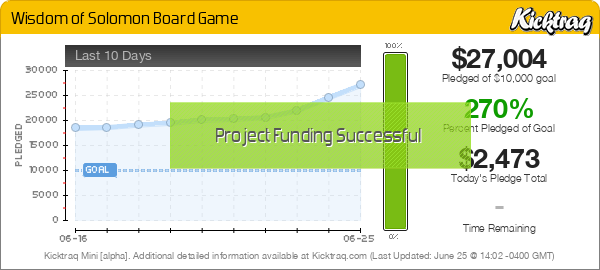
Well, it's happened. I've finally decided to do a Kickstarter all on my own. First time flying solo. The game is called Square Meal, and I'm planning to launch early January. The game is a quick, puzzle-solving, pattern-making race in real-time. It's for 2-6 players (although I'm including a solo variant), for ages 8+ and takes about 15-30 minutes to play. Another cool part is that I've brushed off my digital painting skills and done the art myself.


If you happen to be local to the Cincinnati area, I'll be attending CinCityCon next week (October 11-13) at the Sharonville Convention Center. I'll have a copy of Square Meal to show off and play. Wish me luck!

Friday, July 12, 2019

Ready for Gen Con

Time for another update on my current board game industry plans. This week I've shifted into Gen Con prep mode. I've been reaching out to publishers and setting up meetings. I plan to be there Thursday and Friday, and I have 4-5 games to show. If you'd like to meet, just send me an email or a message on Facebook, Instagram, Twitter, or BGG. I am @pdubarry on most of those.


 I'll also be demoing Rice Dice at a few events and at the APE Games booth (#1739) at various times during the day.

My latest game, Embark, got some love at Origins and will be available again during Gen Con at the Tasty Minstrel booth (#1335). Come check it out!

Lance Myxter and I are continuing to work on our new adventure game. It's coming along really well. If you'd like to help us playtest, drop us a line. We'd love to give you a sneak peak!

One more bit of news: I've just about talked myself into running a Kickstarter. I am currently putting the finishing touches on it. I plan to use The Game Crafter for manufacturing and fulfillment. I think that was the piece of the puzzle I had been missing. Those pictures of cars loaded up with packages for the post office send shivers down my spine. We'll see how it works out. Here is a teaser image of the art I'm doing (yes, I'm back into digital painting again!):


This leads me to my final bit of news. I'm now a freelance graphic designer and artist as well as a game designer and developer. If you find yourself in need of extra help getting a game to the finish line, I can probably do the thing you need. If you are interested in learning more about me, here is a summary of my work in the game industry and here is a sample of my art and graphic design work. Thanks for taking a look.

See you at Gen Con 2019!

Tuesday, December 11, 2018

Updating My Games List

As the end of the year approaches, I thought it would be a good time to update my growing list of game designs. You can see the list HERE. I am closing in on having nearly 15 games and expansions under my belt over my 10-year game design career. If you've played one of my games in the past decade, thanks!

Just a quick look at my plans for 2019: I just finished development for The Captain Is Dead 3 (AEG), and I'll be starting work on designing TCID 4 soon. In addition to a few games being considered by publishers, I am looking forward to a very special adventure game project co-designed with Lance Myxter. Wish us luck!

Hope your 2018 was great and that your 2019 is even better!