Wednesday, October 2, 2024

Citizens of the Spark on Kickstarter

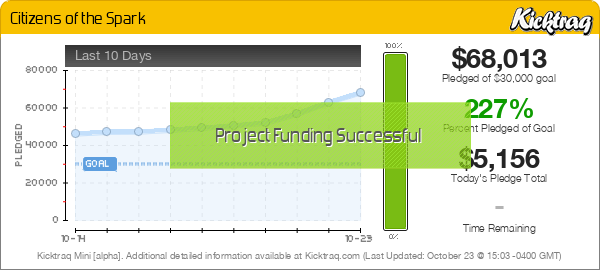
 Citizens of the Spark from Thunderworks Games is now on Kickstarter. The first day has already been amazing--we have nearly reached our funding goal already! This game features variable sets of beautiful animal (awakened into sentience by a strange transmission called the Spark) cards that players will draft into their city. Each card also features an action which becomes more powerful the more citizen of that type you have. However, you must remember that your opponents may also get to do your action as well if they have matching citizens. The game is for 1-5 players and takes 45-60 minutes to play.

Citizens of the Spark -- Kicktraq Mini 

Visit the KS page HERE and the BGG page HERE. Thanks for taking a look!


Oh, and in other news, I apparently forgot to even post about Snowcrest. This one had a successful Gamefound campaign ending in May 2024. Take a look HERE. I got to hold the first production copy at GenCon this year!


Tuesday, June 11, 2024

Order of the Day: Normandy on Kickstarter

Just a quick note to let everyone know that I have a new game on Kickstarter. Order of the Day: Normandy is a simple, yet immersive game about D-Day where you begin by deciding which beaches to invade (Allies) or defend (Axis). This 2-player game plays in around 90 minutes.

Check out the Kickstarter, live until July 30. Thanks!

Order of the Day: Normandy -- Kicktraq Mini

Monday, March 6, 2023

Purim now on Kickstarter!

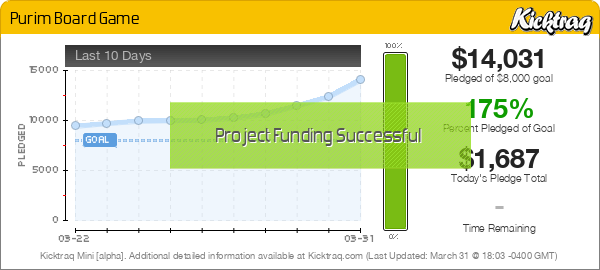
Check out my new game Purim! Save the Jewish people from Haman and his sons in this cooperative drafting game. KS Link: https://www.kickstarter.com/projects/funhill-games/purim-board-game


Purim Board Game -- Kicktraq Mini

Wednesday, July 20, 2022

The Revolution Continues!

My first game, Revolution!, by Steve Jackson Games is now on Kickstarter! It has been out of print for a number of years, but we are hoping to fix that with this campaign. We'd love for you to take a look. It's got an exciting new theme, set in the Pathfinder universe, and includes the best of the original expansion material all in one box!


Pathfinder Revolution! by Steve Jackson Games -- Kicktraq Mini

Monday, November 23, 2020

Get Square Meal Today!


Square Meal is a quick, puzzle-solving race for 1-8 players. In the game, you will flip, rotate, and overlap your three ingredients cards until they form the pattern on your challenge card. When you complete a challenge card, you'll add it to your score pile and immediately begin working on a new one. To win, have the highest score when the deck runs out! NOW INCLUDES TWO EXPANSIONS!


Friday, November 13, 2020

The Honest Kickstarter Timeline

Now that my first Kickstarter is in the books, I wanted to compare my projected timeline to the actual timeline. I hope this look behind the curtains will help other creators plan and manage their campaigns. When setting up the campaign for Square Meal, I included a timeline for the project. Many other campaigns and creators do this, and it seems to help manage expectations. For the record, I added lots of buffer time (even more than normal, since the pandemic was in early days), and therefore was able to deliver the game ahead of schedule.

Here is the graphic I posted on the project page:

As you can see, I promised to deliver the game by December 2020. As of today, I am confident that 99% of the games have reached the backers. I am tracking no outstanding packages. Promising to deliver in December didn't really have a down side. You get your game by Christmas. Also, many other Kickstarters take loads of time to deliver--I didn't hear anyone complain about the projected wait. And the upside was getting to deliver "early."

So, here is how it all really went down. Feel free to ask questions in the comments.

Square Meal Kickstarter Timeline

 circa 2008           Designed a game called Square Off

7-4-19                  Decided to do a Kickstarter for a new version called Square Meal

7-18-19                Art completed

9-17-19                Initial graphic design completed

9-18-19                Ordered first prototype from The Gamecrafter

                              Testing and revisions

10-15-19              Ordered second prototype and sent several preview copies from The Gamecrafter

10-22-19              Started Mailchimp mailing list

                              Testing and development of expansion material

11-4-19                Ordered expansion material and color tests from The Gamecrafter

                              Manufacturing and shipping quotes

12-6-19                Began constructing Kickstarter page

                              Testing and development of additional expansion material

1-7-20                  First Kickstarter launches

2-1-20                  First Kickstarter ends unsuccessfully (270 backers pledged $4528)

2-17-20                Second Kickstarter launches

                              Additional manufacturing and shipping quotes

3-12-20                Square Meal is funded!

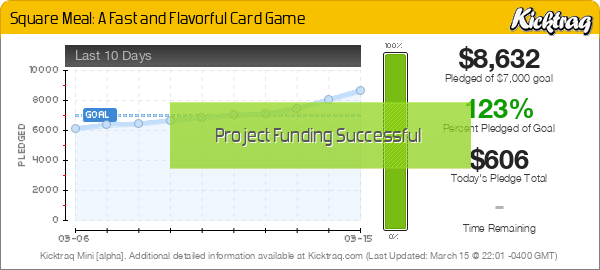
3-15-20                Second Kickstarter ends successfully (489 backers pledged $8,632)

3-17-20                Setup preorder landing page

                              Pandemic lockdown in US

3-29-20                Kickstarter funds received

4-14-20                Files uploaded to Gameland

4-16-20                Registered Phantasio Games LLC

5-8-20                  First payment wired to Gameland

5-27-20                Distribution deal reached

6-3-20                  Box size increased and file resubmitted

7-1-20                  Photos of production samples sent

                              Additional shipping quotes gathered

7-27-20                Overseas shipping of distributor copies arranged with OTX

7-29-20                Final physical production samples delivered

                              Payment for distributor copies received

7-31-20                Backer shipping info downloaded and surveys locked

8-5-20                  Backer copies supposedly sent to VFI Asia (the wrong project was sent)

                              Typhoon delays boat departure and VFI operations

8-6-20                  Second payment wired to Gameland

8-8-20                  Boat leaves the port in China

8-17-20                Correct backer copies arrive at VFI Asia

8-17-20                Shipping payment wired to VFI

8-24-20                Cargo reaches Los Angeles

8-27-20                Shipping notices sent out

                              Australian parcels stuck in China

9-3-20                  Cargo reaches Chicago

9-9-20                  Backers begin to receive their games

9-10-20                Cargo not loaded correctly

9-11-20                Cargo reaches Funagain warehouse in Indianapolis

9-13-20                Australian packages experience significant delays

9-15-20                OTX paid via credit card

9-17-20                Received 6 cases of Square Meal at my home

10-13-20              Australian games finally reach Sydney and are delivered


Friday, May 29, 2020

Tiger Stripes Card Game


Good news! Isabel (my daughter) and I have created a new card game based on Isabel's first board game design, Tiger Stripes.

It's only 54 cards and light on your printer ink. The game is still in its prototype stage, but we feel like it's already pretty strong. Even so, we'd love some more feedback. Tell us what you think. Got any ideas for making it better? What did you love? What falls flat for you? We want to know. Thanks!

Tuesday, March 17, 2020

Square Meal Funds on Kickstarter


Square Meal funded! 489 backers helped make this game a reality. Now comes production and fulfillment. If you missed out on the campaign but still want a copy of the game, you're in luck! Click HERE to preorder a copy of the game. This preorder window will be open until fulfillment begins later this year. Don't miss it again! Thanks to all the backer for their support!

Wednesday, February 19, 2020

Square Meal is Back!


Square Meal is back on Kickstarter, and things are going much better this time around. We are nearing 50% after just two days! If you were sitting on the sidelines last campaign, consider jumping in this time. Thanks for taking a look!


Square Meal: A Fast and Flavorful Card Game -- Kicktraq Mini

Monday, February 10, 2020

Square Meal Relaunch Soon


Square Meal will be back February 17! CLICK HERE to visit the pre-launch page and follow the project to be notified on launch day. We didn't reach our funding goal last time. However, we've made a number of tweaks to the project including a significantly lower goal! Check out Square Meal today!

Tuesday, January 21, 2020

New Expansion for Square Meal!

We are about halfway through the Square Meal campaign on Kickstarter. Originally, I had planned a few stretch goals in case funding was met early. However, due to a new manufacturing quote I recently received, I can now offer all the stretch goals immediately! Square Meal now includes TWO 21-card expansions and some component upgrades (better box and card quality). Find out more about the new Dinner Party expansion in the latest update! Consider backing today!

Tuesday, January 7, 2020


Tuck in your napkin and grab your fork because Square Meal is now being served up on Kickstarter! CLICK HERE to visit the project page and learn more about my latest game. Shipping is free to almost everywhere! Thanks for sampling this spicy little hors d'oeuvre!

Friday, December 13, 2019

Square Meal Pre-Launch Page


The Kickstarter for Square Meal has been approved and is still on schedule for January 7.  
CLICK HERE to see the pre-launch page and follow the project! Thanks for your support.

Tuesday, November 19, 2019

Shelves are Small

Image from www.analoggames.com.


This is the fourth article in my series for new game designers. In previous articles I’ve discussed the use of rules, time, and math in games, and how to avoid common pitfalls. In this installment, I will address the actual, physical space your game fills. In the age of Gloomhaven, Ogre, and other massive Kickstarter-fueled beasts, you might need to give some sober thought to the size of your game.

Observation #4—Shelves are Small
The now commonplace “game shelfie” gives players an opportunity to show off their vast collections. This might give one the impression that storage space for games is vast and limitless. However, this is far from the truth. For every hobbyist with a dedicated game room lined with hundreds of games, there are many other gamers of more modest means. And even these alpha-gamers face the cold reality of running out of space. The periodic game purge has become as ubiquitous as the shelfie.

The situation for individual gamers represents only the tip of the iceberg. Bright, colorful store shelves in game and big box stores present a cheerful front but disguise a cut-throat struggle for the attention of shoppers. Every inch of space must fight tooth and nail to earn its exalted place before the eyes of consumers. Games that don’t sell are quickly shifted to the bargain bin. And we have yet to mention the rows and rows of crates in distributor warehouses across the world. With a thousand new games flooding the market every year, finding a place on a shelf can be a real and ever-increasing challenge.

So what has all this got to do with designers? The bottom line is that, generally speaking, your game needs to be as small as possible, while still delivering your core experience. This is not to say you can’t make a solid table-hog miniatures game in a boat-sized box. However, each and every last component must pull its weight. Publishers, and ultimately, gamers, want to get the best bang for their buck. Do everything you can to reduce the production cost of your game while providing good value and matching the expectations of players.

The best way to get a sense of this is by looking carefully at published games. While games can come in nearly any shape and size, the industry has a few standards. A tuck box card game (Uno) will retail for around $10. This is expected to be fairly simple and last around 15-30 minutes. A more expansive card game (Exploding Kittens) will come in a small two-piece box and sell for $20. This size game may only have cards, but can also include a few small components. Players are still expecting a light, quick experience. Next we have a slightly larger box (For Sale) selling for $25-30. Now players are expecting a game that can last up to 45 minutes. This brings us to the most popular board game size, the 12”x12” square box (Ticket to Ride) retailing for $50-60 ($70 if there are extra components and the game is longer). Players now want to see a board (or large shared play space), a fair amount of additional components besides cards, and a play time of 45-60 minutes (or a bit more). Finally, we come to bigger boxes (Scythe, Eclipse, Thunderstone Quest, Gloomhaven). We expect these games to cost $70-100 (the price will go down if the game becomes popular enough to print in high quantities). Often the “all-in” pledge on Kickstarter for these games will be as high as $200-300 or more. Players expect many hours of content and session times of 90-120 minutes or more. They will also accept longer rule books and more convoluted mechanisms in games of this size.

As you can see, there is a pretty close relationship between the size of a game, its complexity, its play time, and its cost. Designers would do well to stay within these bounds. Much like a wrestler might need to shed a few pounds to qualify for a lower class, a game often needs to be more condensed to hit the right note in the marketplace.
It has taken me a while to learn this lesson. I once designed a game with loads of cardboard hex-shaped tiles where players were building and exploring a map in real time. The game would have needed a large square box and a retail price of $50. The problem was that the game only lasted about 15 minutes. While the game was fun, it was simply too big for the experience it offered. Regrettably (and stubbornly), I repeated this mistake with another real time train game a few years later.

How can you decrease the size and component count of your game? Here are a few ideas:

First, consider the parts of your game that are not used as much. Maybe there are special tiles that only come into play during certain times. These might need to be shrunk or eliminated. Often, the solution is to combine the component with another part of the game. While you don’t want your players to run out of a component such as cubes, many of those cubes will not often come into play. Think about ways to alter the rules to allow a reduction in the total number of cubes needed.

Second, think about the scoring system. One common solution is to replace money or tokens with a scoring track (often found around the edge of the board). Some games solve this problem by using a dials built into the player boards or the board itself (although this can also be expensive). This method can also be used to track other stats in the game—health, damage, morale, resources, etc.

Finally, cards are cheap. Wooden, plastic, and metal components look sharp, but they can add considerable expense (as can dice). Figure out ways to use more cards and fewer of the other types. Cardboard is also relatively inexpensive, but it can sometimes add too much weight or command a larger box size to accommodate too many punch boards. Cards magically provide loads of design space for a fraction of the cost.

One final caveat: while it is vital to keep your components to a minimum, you might want to keep an eye on table presence. A game needs to look impressive and interesting once it’s set up on the table. It needs to grab the attention of people walking by. The “toy factor” of a game can be an important selling-point. In this case, extra material used in an innovative way can pay dividends in a memorable player experience. Sometimes more is more, if you do it thoughtfully.

I hope this has been helpful. It takes real creativity to condense a prototype into a smaller and smaller size. The more you can do to reduce the production cost for your game, the more attractive it becomes to publishers and the more value players will enjoy. Thanks for checking out this series of articles. I may think of others from time to time, but this will conclude the series for now.

Wednesday, November 13, 2019

Math is Hard


Thanks for checking out the next article in my series for beginning game designers. If you missed them, the previous articles were Rules are Bad and Time is Precious. Today I’ll be talking about math in games--specifically, why you should have less of it. I’ve noticed quite a few games recently where the amount of math required greatly detracts from the overall experience. If I have to spend my turn adding and subtracting stats modifications (+1 strength, -2 defense, resistance to spell damage of 4, plus the upgrade for being an elf . . .), I can become overwhelmed. Instead of playing a fun game, I’m doing math. This can be a problem in published games, but it seems especially rampant in prototypes from new designers.

Observation #3: Math is Hard
As a game designer, you need to know some math. I spent the first several years of my design career flying by the seat of my pants and mostly getting through the math-intensive parts by instinct. I will concede that instinct can take you surprisingly far—if something feels right, it’s probably close enough. However, I decided it would be beneficial to spend some time studying basic probability. This has helped me tremendously, cutting down the amount of time it takes to get the right mix of components in my games. I recommend that you do the same if you are a little fuzzy on the concept of probability. Deep down, math is the bedrock of most games. That doesn’t mean that your players should be forced to confront heaps of math to play your game.

The first big problem is that people hate math. Whether due to bad classroom experiences or wider cultural biases, some people break into a cold sweat just thinking about math. It’s a significant challenge for math teachers, and as it happens, for game designers. If you are a game designer, you probably aren’t as aware of this as the average person. I’m guessing your tolerance of math is much higher, particularly if your background is in computer science, engineering, or math education.

A few years ago, I was playtesting a new train-themed dice game with a publisher. The game required players to roll dice simultaneously, in real time, to collect enough money to win. The other twist was that players had to keep track of how much money they had (in the form of chips) so they would know when they had enough to claim victory. I had played a number of times and thought the game was quick, simple, and reasonably fun. The publisher burst my bubble by pointing out how difficult this game would be for many casual gamers. Not only did the game force you to do math, but you had to perform that math under intense time pressure! Needless to say, I had a significant problem to fix.

Another challenge facing designers is dealing with short term memory. Psychologists have found that most humans can store between 5 and 9 items in their short term memory (or working memory) at one time. We can keep this information in our heads for about 15-30 seconds. This is why phone numbers are seven digits long. The more information required, the more difficult and prone to error the task becomes. A related concept is called cognitive load. People can only pay attention to so many things at once. If you require your players to consider too many options at one time, things will grind to a halt and the dreaded analysis paralysis will set in.

One other problem is that people just don’t understand probability. The human mind is simply not great at intuitively grasping the probabilities of events. Instead, our brains pay too much attention to frightening events and too little attention to harmful events hidden in the background. One person recently had this advice: if you read about something in the news, you don’t have to worry about it (plane crashes). If it’s not in the news, you do need to worry about it (cancer). Games that require too much knowledge of probability can become too difficult for most players. Instead of being fun, they will seem arbitrary and opaque.

So must we remove all forms of math from our games? How can this situation be addressed? Here are a few ideas for your next design:

First, try to remove as much math as possible. Instead of using standard dice, consider using custom dice with symbols. Counting symbols is easier than adding pips and then modifying based on other factors. In my game Black Orchestra, I originally had players roll standard six-sided dice, trying to hit a target number based on adding together two tracks of information (Hitler’s military support plus his level of safety). This was clunky and needlessly difficult. One of the developers encouraged me to change the system to something using icons instead. In the final game, players simply roll some custom dice and count the cross-hair icons. This works so much better.

Icons can also help with short term memory problems. While it’s true that humans can only remember about seven things at once, there isn’t as fixed of a limit on how big each “thing” can be. This is called chunking. Sometimes one icon can represent several different factors or pieces of information. Once players learn the icon-based language of your game (which hopefully won’t be too taxing), they will be able to deal with more complex information more easily.

If your game does still need a good bit of math, try to push it all to the end of the game and provide players with a score sheet to help tally everything up. Many popular games have used this technique to great effect.

Finally, cognitive load can be decreased with solid graphic design. You might notice that playing published games is easier and more pleasant than playing prototypes. While much of this is due to the quality of the game itself, a significant factor is the ease with which players can identify and interact with all the components of the game. Generally, new designers are advised to make the first version of their game as quickly as possible. However, once the game begins to take shape, you would do well to spend a bit more time thinking about the layout and accessibility of all the various icons and text. You don’t want bad handwriting to affect people’s perception and ability to perform well in the game.

So unless you are making the next Advanced Squad Leader, try hard to get rid of the math in your game. Players just want to play your game—they don’t like doing math. In the next article I’ll address the size of your game. Thanks for following along!